Affordable Energy
A programme of independent reports on what Britain's climate and energy policies have cost, and how energy can be made affordable and reliable again.
The question
What has net zero cost Britain, and how can energy be made affordable and reliable?
Why this programme
Energy prices reach every household budget and every decision to build or close a factory. Since the early 2000s, policy has changed how Britain's electricity is generated, how it is paid for and who pays for it. The changes came one scheme at a time, and their costs are spread across bills, taxes and network charges, so the total is hard to see.
Affordable Energy sets out to make it visible. The first reports diagnose. They measure what net zero has added to Britain's electricity bills since 2002, cost the policies line by line, and test the official estimates of what is still to come. Later reports turn to heat and homes, cheaper reliable supply, and how prices are set and who pays. The closing report sets out options for reducing the cost, lawfully.
The programme is written for those who make policy: party researchers and advisers, and the think tanks working on the same problem.
How we work
Every figure comes from a frozen model release or a named primary source, and the reports say which figures are modelled and which are measured. On release day, each report's model code, input data and results are published so anyone can rerun them; data that cannot be republished is linked.
Before release, each report goes through hostile review. The reviewer reruns the model and checks every figure against it. Each report's register of claims will be published with it.
Corrections are listed, dated and credited on each report's page. Once a report is released, its earlier versions stay online.
The reports are not commissioned or paid for by anyone. The author has no financial interests in energy companies, including through any pension or fund he directs.
The reports
Released in this order, once each has cleared review. Each comes as a short report for general readers and a technical paper with the full method, published with its model and data.
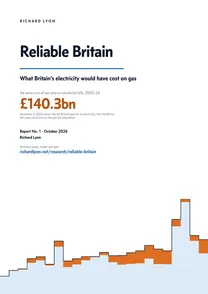
Reliable Britain: what Britain's electricity would have cost on gas
What has the drive to net zero added to the cost of Britain's electricity since 2002?
Published 26 October 2026
The Price of the Climate Bill: what climate policy has added to Britain's energy bills, 2002 to 2024
What has climate policy added to Britain's energy bills, line by line?
Coming October–November 2026
Checking the Sums: the cost of net zero, line by line against the Climate Change Committee
What will the UK's net zero programme cost in full, tested line by line against the Climate Change Committee's estimate?
Coming October–November 2026
Heat and Homes (working title)
What are the options for heating Britain's homes affordably, from geothermal heat to Passive House building?
December 2026
Cheaper reliable supply, and what it means for industry (working title)
Could nuclear, or gas with or without carbon capture, supply reliable power more cheaply, and what would that mean for industry?
January 2027
How the price is set, and who pays (working title)
How is the price of energy set, how could that be reformed, and who bears the cost: households or industry, which incomes, which regions?
February 2027
Stopping the Clock
How could Britain lawfully reduce what it pays to support renewable generation, including the bill still to come under contracts already signed?
March 2027: the closing recommendations
Follow the programme
The reports are free to read. To hear when each one is released, subscribe on Substack.